Sunday, June 5, 2016

A week in Maasai land


As a child growing up in New Zealand I never gave much thought to how children on the other side of the world lived their lives. I never really appreciated all I had, all I was given and every opportunity I had and still have. But as I spent time out in Maasai land this week I couldn’t help but reflect on how different my childhood was to the children who live out in that village.

In striking contrast to the lives of many Maasai children my childhood was one where schooling was a given not a privilege, regardless of whether I wanted to be there or not. Many children don’t have that privilege because if they go to school there will be no one to take care of the many, laborious, time consuming chores, that need to be done in order to survive. My childhood was filled with toys. I had dolls, barbie’s and bikes, yet I still wanted more every birthday and Christmas, and I complained a lot if I didn’t get the toy I wanted. These kids entertain themselves by chasing cows, climbing trees, playing with sticks and stones, or in this week’s case by staring at the strange wazungu (white people) who entered their village. I grew up with many career paths in mind, my future was always one of possibilities and as a child the sky was my limit. As I grew older my choices were a little more limited and strengths based. I recall wanting to be a singer for many years until I realised that to be a singer you actually need some kind of musical ability, that dream was then replaced with wanting to be an actor (I clearly liked being the centre of attention) and eventually I chose teaching. I never had to worry about water. I just turned on the tap and it was there in abundance. I didn’t have to walk miles to get it, and not only did I drink it but I showered in, swam in it and played in it.  While I don’t blame my childhood self for being selfish, ungrateful and ignorant I no longer have any excuse to live this way as I am now aware.
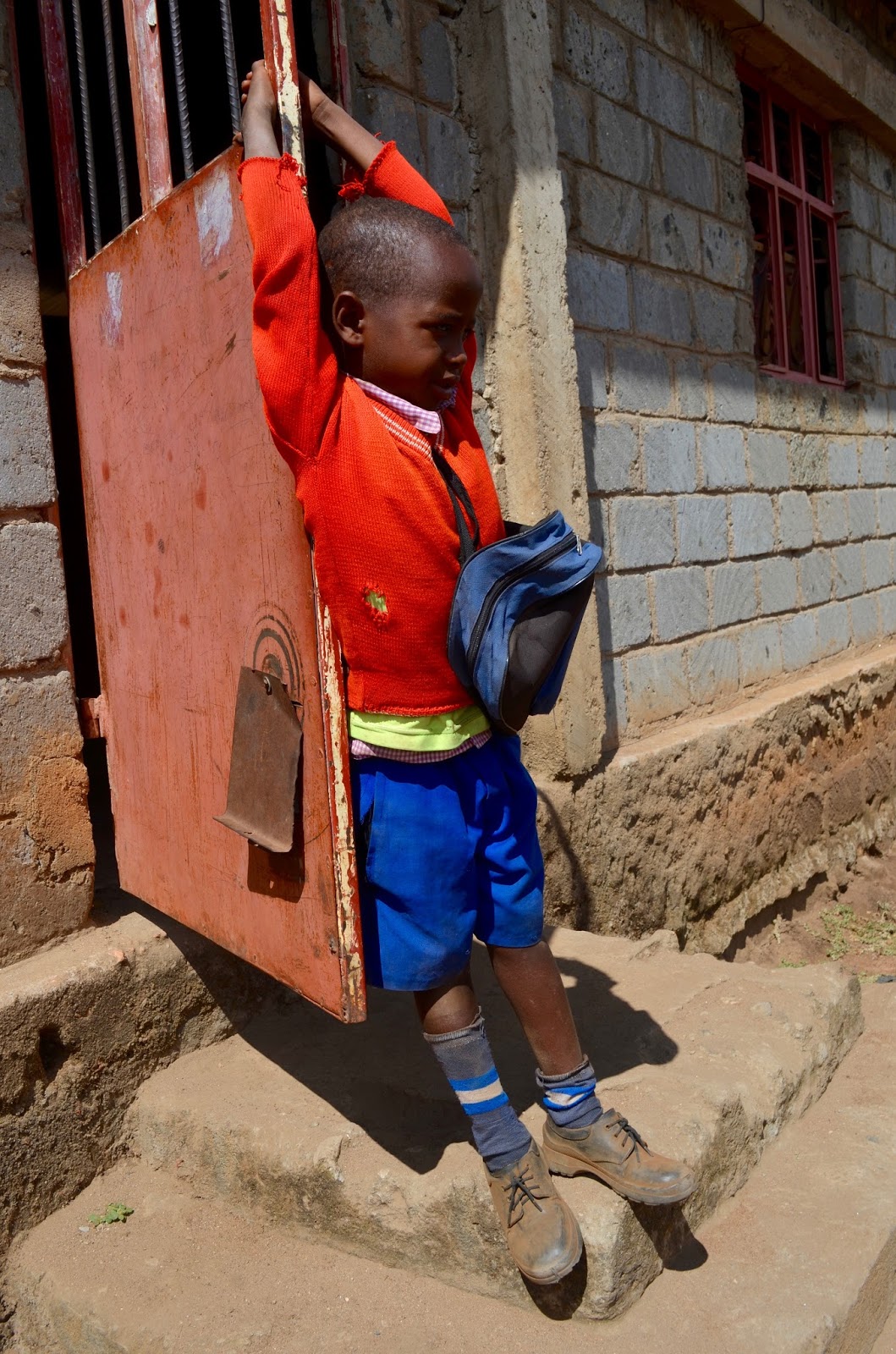
This week I saw little boys covered in dust and dirt, with sandals made from old tyres and a stick caring for his families’ cattle, not just their cattle but their livelihood. This was in the middle of the day, at a time when many other children would be in school getting an education, dreaming of their future as teachers, builders, doctors etc. For this little boy his future is one of survival he will most likely grow up, marry several wives, have several children who will then take over his job of caring for the cattle.

We also had the privilege of being welcomed in to a Maasai Mama’s boma (mud hut). This lady’s name was Rose, she is one of two wives and has her own boma for her and her children. Rose is a special friend of Wendy’s and is a born again Christian. She had so much joy and held Wendy’s hand as they walked quickly up the hill to her boma together. I had never been inside one of these huts before and I was very humbled by its simplicity. It was a dark small home, made with mud walls, a stick frame and thatched straw roof, which probably would not keep the rain out in rainy season. In the corner where Lynda sat there were two small child sized beds made from Cow’s Hide and sticks separated by a few sticks. I sat on a bucket as Rose lit a fire to make chai (tea). The little house filled with smoke which stung my eyes and made it hard to see and talk, I tried my hardest not to let my discomfort show as I felt so blessed to be there sharing in a little piece of Rose’s world. Rose’s beautiful daughter of maybe 9 years old sat seemingly unaffected by the smoke and she watched me with curiosity. I remembered I had a small packet of jelly beans in my bag which I offered to her. She took them gratefully and ate them but was still too shy to talk to me, she continued to watch me intensely, returning my smiles then looking down to hide her face, by the time we left this little girl was brave enough to hold my hand as they walked us back down the hill and responded to my simple Swahili questions.

I was less effected by the simplicity of Rose’s house but was more effected by Roses joy and contentment, one that I have not seen so much in people in New Zealand. It seems the more we have the more we want, and the less satisfied we are. I guess we also grow up with so many expectations and dreams that when unrealised they can leave us feeling depressed. Rose laughed and chatted away to Wendy as one of the Maasai teachers translated for them both. It was easy to forget how little this family had and so many other families in that village have when they have so much joy and childlike faith.

This area does not yet even have running water and they have to walk miles to get water or wait until the local truck (that is literally falling apart) brings water in. There is now a well but they don’t yet have a pump. We brought all our own water in for the week and for probably one of the first time in my life I thought about how much water I used and made sure to use only as much as I needed knowing that it had to the last the week. How much more would they have to think about water?


One of the key leaders in this area has a vision of seeing this area developed through education and leadership. He wants to see locals trained as doctors, teachers, etc. so that they can come back and serve and empower their community. Already the process has begun with a small preschool and year one group of children being educated in the local church building. This is where we spent our time. The vision is for a Christian school to be built there with plans already being underway.
While we were there we worked with 6 local teachers. Wendy and Lynda taught them how to bring bible stories to life and involve children in the process through storytelling, acting, retelling charades etc. I also taught a few simple learning games that require no resources that the teachers can use with the children. The next day I had the privilege of then teaching and playing one of these games with the children. The church classroom was very basic with the only resources being a few chalkboards, lesson books and pencils. But despite not having much the teachers were full of joy, enthusiasm and love. 3 of the teachers will hopefully be training through Joshua teacher’s colleges this year, they will then be able to use their training to mentor and empower other teachers in their community.
It’s exciting to see this taking place. While it’s only early days I know that great things will come out of this community and that children will have opportunities and lives that they never would have had otherwise if it wasn’t for education and knowing God.
It is clear that life in this village is very simple and the people live with the bare minimum including only having one meal a day, it is also clear that God has a plan and a purpose for the village. You can see the joy and love in the locals they have literally been transformed by the love of Christ and because of it their children now have a brighter future. Girls are being educated rather than married off and circumcised.  No one could ever convince me that there is no God I look into the eyes of people whose lives have been transformed and see light, joy and love and I know without any doubt that it is the work of God in them.


Sunday, May 22, 2016

Perception vs Reality

Do you ever wonder why we act the way we do and how our cultural upbringing influences our perceptions, thinking and choices? Or why certain things annoy us or matter to us so much?   I find it so fascinating especially living in a culture that is so different to my own. I am daily faced with my cultural prejudices and biases. So much of my thinking lately revolves around how I should respond, dress, speak and act in culturally appropriate ways.

There are certain situations that offend, discourage or annoy me about being a minority in Tanzania. But today while talking to my friend Lulu about these things I realised that my annoyance comes down to perceptions of events rather than reality.

An example is being greeted in a high pitched voice by males and youth. To me this feels like being mocked. Lulu offered a different perspective on why this happens. She said that the reason
they do this is out of shyness and not wanting to be shamed. Because if they say "hi" and then we do not answer then they can make out that it was just a joke. Lulu said she often will hear the youth daring each other in swahili to say hi to the wazungu.

Another situation where I felt I was being mocked was in the daladala (public transport), some high school girls were sitting behind me and touching my hair then laughing. It made me feel like some kind of freak show. I shared this with Lulu and she said that they are just amazed by me, because my hair is so different to their own. She explained that it’s not that they think i’m weird but more that they think of me as some kind of mystical creature.  Hearing this made me feel different about it, it’s kind of cool to be a mystical creature... I always wanted to be a mermaid as a kid :P.

My third example is being laughed at when I attempt to speak Swahili. Again I think I am being laughed at because I am saying it wrong. But Lulu explained that they are laughing because they are happy. It means so much when we speak their language. One thing I do love is the smile it puts on people’s faces when I do speak Swahili. It also makes me smile when an old bebe shakes my hand after I shikamo her (shikamo is a term of respect given to older people, it translates to “I kiss your feet”).

One day I’ll be back in NZ and no one will stare at me because I am different, no one will yell out to me “Mzungu,” or say "Hi" in a high pitched voice (unless that is actually how they talk). No kids will greet me with "good morning" when its actually the afternoon, in fact I probably won’t get greeted by kids at all! Unless they know me, and you know what I’ll probably really miss it!

It’s a weird paradox of wanting to blend in here but also kind of enjoying the fact that I am different and that everyone wants to talk to me. I am extroverted at heart so I love meeting and getting to know new people, some days more than others though.

While reflecting on all this, I realised that our western culture is one of mocking each other and that is not really the case here, so much so that sarcasm is often taken literally because it’s not a form of humor the locals use. And if you think about it the root of sarcasm is mocking.

Lulu surrounded by her fan club ;)
I truly love living in a different culture and feel so blessed and privileged to be spending a whole year in Tanzania. It is so easy to get caught up in our own little worlds and think that our own worldview is complete and accurate, but in reality there is so much to learn. I have also been thinking a lot about the way so many of us live life in New Zealand. Just because we have always done something a certain way doesn’t mean it’s the only way or even the best way. Why do we feel the need to mock each other? Why do we spend more time working and trying to get rich then we do with the people we love and care about? Why are we always so busy? Is this really the best way to live this life? And why if we are doing everything right, getting a career, having a family achieving goals keeping busy, why are so many of us still so unhappy? Why is the suicide rate so high in New Zealand? Why are there so many cases of domestic violence? We are so privileged yet it’s all not enough.

I’ve been reflecting on these things a lot lately as domestic violence stories full my homepage. I think a lot of it comes down to our perceptions and expectations.

For example, what is our perception of God? Is he only good when life is good, is he only worth living for when it suits our lives or is he good regardless of our circumstances? This year my conviction of God, as a good father has increased so much, it genuinely grieves me when I realise so many people don’t fully believe in the goodness of God. Believing God is good doesn’t mean I don’t get mad at God or have doubts at times it just means that I have an assurance that no matter what comes my way that my God is a good Dad and he is worth living for. He is all
 knowing, all powerful, all loving and even though I don’t always understand what he’s doing I’ll choose to trust in his goodness.
 At the same time though a good Father doesn’t get mad at his children when they are struggling, or doubting, a good father loves us anyway, and that’s what makes doing life with God a truly beautiful thing.

Sunday, March 20, 2016

Finding my passion

There’s something truly awesome about finding your place in the world and the role that truly satisfies, finding your passion… I realise more and more that for me that place is found in teaching. I cannot think of anything I’d rather do than work with kids.


Whether it be working in a preschool in NZ, leading a cabin at Riversdale, children’s camp, or teaching in Africa, I simply love it. We can learn so much from children. They are genuine; what you see is what you get. They love and trust without fear, they don’t hide away what they are feeling and they show affection freely. Whenever I go down to school the children in the class where I spend most of my time come running over to me, to hug me, greet me, hold my hands, carry my bag etc.
 If I’ve been away in Magugu they get so excited to see me as if  iv'e been gone for about a year! The other day a little girl said to me “Teacher Rachel, I love you.”
Imagine if we as adults greeted each other like that when we arrive in an office, at a law firm, in a shop, or at the hospital, it just wouldn’t happen! And to be fair it would be a bit weird if an adult greeted us that way! 

That does not mean that at times children are not frustrating, disobedient or exhausting. But the beauty of children is that even when you growl them or give consequences they still love you and are quick to forgive. It also doesn’t mean that I am not excited for the upcoming holidays.

A few weekends ago we made a trip out to Falco’s Children’s home in Karatu, about two hours away from here! It was honestly one of my favorite weekends to date. Hanging out with the kids, playing volleyball, soccer, playing on their playground, having cuddles with so many gorgeous kiddies, watching their very amusing talent show that they put on. And talking to Tammy and hearing all her amazing stories about how they ended up where they are, doing what they are doing and how God provided and also some of the heart-breaking stories about how some of the kids ended up there including the story of miracle Moses. It’s amazing that Moses survived as he was placed in a plastic bag and buried in a shallow grave as a new born baby, and then was found about 12 hours later by a shepherd who just happened to be walking in the area. Tammy and Her husband then felt to adopt Moses and now he has a hope and a future!


Nothing breaks my heart more than the thought of children without parents, but it warmed my heart to hang out in a place like Falco’s children’s home, where the kids are loved, they are confident and they are happy. The children’s home is down a long dusty track in a village with one of the highest orphan population in Tanzanian which is largely linked to a high rate of prostitution.

A few years ago I read the story “Kisses from Katie” about a young American girl who went to Uganda on a short term trip and then through a series of events and over several years, ended up adopting 14 orphaned girls. She has since started up a ministry that helps feed, and educate thousands of children (Amazimia ministries). This book was very inspiring but it’s easy to think that I could never do anything like that and to put Katie up on a pedestal. But then to go to a place like Falco’s Children’s home and see first-hand the way that Tammy and Jerry have allowed God to use them to bring hope to many children’s lives, and to see the result of their love and commitment and hear the story of how they were literally given 70 acres of land, by the locals! It just makes my own desire and dream to work with and help orphaned children even greater. It makes it seem possible, achievable and real.  We will definitely be visiting their again!

I love that plans change! If I had stuck to my plan I would already be back in NZ recovering from jet lag, but instead I am sitting in my lounge in Tanzania writing this blog about what I love, following an awesome weekend of hanging out with the friends I have made, feeling totally content and grateful to God for this opportunity. It’s now been 3 months since I arrived and I can honestly say It’s the people you meet and the connections you make that make a place truly feel like home.
I am excited for what this year has instore, right now I am mostly working with the children who are struggling with reading, which I am loving :D 


If you want to know more about Falco’s children’s village check out their website: http://www.falcoschildrenvillage.com/

Friday, February 19, 2016

#TIA This is Africa!

Ever since I decided to stay the whole year I keep having these “wow I actually live in Africa!” moments. A lot of the time it feels so normal especially because I live with Emma a kiwi and
Rebecca another kiwi who stays with us often and soon an Australian too (lets be honest aussies and kiwis are not all that different) and my neighbors are kiwis (Jan and Rod, Lynda and Allen, Joanna). But then we leave the gates of our compound and suddenly it becomes very real that I live in a culture completely different to my own!

For starters we can’t go anywhere without people staring and saying “wazungu” (white people). We can never just blend in with the crowds here! It’s also strange to live in a place where my first language is the locals second language and where many people don’t speak my language at all! It’s good motivation to learn Swahili and I am having weekly lessons with Mama Louis.


There are so many things in New Zealand that I take for granted. Like drinking out of the tap! We have to filter all our water in a bucket filter, or buy bottled water.
 Also being able to get in my car and go anywhere at any time (well not quite anytime! Restricted licence curfew! haha). Here I hardly go anywhere by myself! This is partly to do with the communication barrier. The few dala dala trips I have taken have been interesting! I’ve had to write down how to say where I want to stop before I leave. But also for safety reasons. And even if I could afford to have a car, I have no desire to drive here. Road rules are more of a suggestion, round abouts and intersection rules are basically the pushiest car goes first, and passing gaps seem to be incredibly small! If that’s not bad enough sometimes you get fined simply because a police officer wants “soda money” apparently you can get fines for your car being too dirty even!

We can’t go anywhere without being confronted with the reality of poverty whether it be beggars, street kids, village kids, or recently a guy came up to me and begged me for my water. There are so many things here that literally break your heart.
I have to always be aware of what I am wearing. It’s disrespectful to show your knees here and tight pants are a no go. So my wardrobe now consists of long skirts and harem pants. Most of the time I don’t mind but sometimes I just want to where whatever I want to! You definitely cannot afford to be fussy here. I have used squat toilets I would never dream of using in New Zealand and eaten more rice than you could imagine as well as other things I probably wouldn’t eat back home.

And don’t even get me started on shopping here. If you think New Zealand retailers are pushy try shopping in a town where you literally get bombarded with people trying to sell you things, or begging you to look in their shop. It has its upsides though, when shopping in the second hand market we had three guys digging through all the clothes to find me skirts and dresses that I liked. There were MANY that I didn’t like but they didn’t stop looking for me.  When we eventually found a few I liked they brought me a mirror to look in and told me that it made me look like Kim K (I can definitely see the resemblance) hahaha. Fruit and vege shopping is the same deal you constantly hear “sister, tomatoes, sister zucchinis, sister mangoes” I actually love shopping here though it’s always amusing!


You also cannot go anywhere without greeting people and it always more than just a hi. Which is actually really nice but if you’re in a hurry, busting to go toilet or in a bad mood sometimes it’s hard to do the whole greeting back and forward deal haha.

Despite all of these quirky and challenging things I love it here. I love that no one really cares what you wear and about having the latest fashion! I love going to the crazy busy markets with Emma to buy our food. I love the amusing shopping experiences and feel such a sense of accomplishment any time I communicate anything in Swahili. I love being greeted everywhere I go and chatting with and making connections with the locals. I love the slower pace of life and that it’s not all about squeezing more into your day. I love being swarmed by village kids in Magugu and teaching the kids in class one where I teaching and mentoring. I love the landscape and travelling places and all the interesting and quirky things you see out the bus or car windows; like the lady with a whole pile of socks on her head, the lady bathing fully clothed in the river, people sleeping in strange places, kids in the middle of nowhere walking to school, Maassai men with their cattle and even better seeing Zebras and Giraffes on the side of the road!


 But most of all I love living in a community of people who are passionate about God, where God is the priority he’s everything! If anyone ever doubts Gods existence come to Africa and go out on outreach with Rod, Jan, Emma and Simon and see how God heals people. People cannot fake being healed especially when they don’t even believe God can heal them until He does! The spiritual realm is very real here people literally are held captive and God literally sets them free. My faith grows every day that I live here.

Then there is the practical outworking of God’s love here through providing children with quality education. Yesterday I was talking to Wendy and Archbold about the education system. They explained that if people don’t pass form 4 they cannot repeat that year they then are very limited to what career they can choose and people are placed in universities based on their results. So there is a lot of pressure for people to be educated and to pass exams! It could be the difference between living in poverty or not. But the sad thing is there are many places here that offer education but it’s not quality. I am realising more and more the importance of education and my passion for teaching is growing. I love being a part of something bigger than myself!


It’s hard to imagine all these things until you have been here and experienced them, but I definitely recommend visiting a third world country at some point in your life.


Friday, January 22, 2016

Cultural challenges! A teacher and a learner

If you ever want to learn about yourself; what inspires you, what you believe, what pushes your buttons, what your culture has ingrained in you, what matters most to you and how privileged and blessed you truly are, then immerse yourself in a culture that is completely different to your own.


School started back two weeks ago. My role while I am here is to work a long side the class teacher and her assistant in a mentoring role. So far this has involved observing lessons and offering suggestions, modelling lessons, planning with her, testing children for reading and arranging them in to reading groups, showing and planning reading activities, taking reading and writing groups, helping her to take differentiated lessons (catering to those who struggle and those who don’t). Encouraging her to plan ahead and prepare for her lessons in advance and to transition from lesson to lesson. At first so much time was wasted because things were not prepared in advance.


 I was worried that I wouldn’t know enough or have enough experience for this role, but as soon as I stepped foot in the classroom all my learning from teacher’s college, and practicums came flooding back. To the point that at first I was probably overwhelming the teacher with suggestions of things that could be done differently. Things that to me seemed like second nature because not only was I taught them at teacher’s college but also experienced them in my own schooling.

I have been extremely challenged this week and at times overwhelmed because I want to see things happen quickly. When I test child after child who can’t read at all, or when they do read can’t tell me about the story, it’s discouraging. It’s because I keep making comparisons to a New Zealand context and that’s not fair on anyone. There are so many factors that contribute to these issues. For starters English is their second language and they ae still very young. It’s likely the only place some of them hear English is at school. They don’t have iPad’s and TV’s to teach them English and then at this age they are only at school from 8-12.30. The children also have limited experiences they can’t afford to take holidays or go on day trips or on safari. But what they do know about they are experts in. Some of the kids in my class would be expert farmers and would look after their family cattle. If I asked them questions about this, in their own language, I am sure I’d learn a lot! Another factor is the majority of parents believe that it is the schools sole responsibility to teach their kids, so they don’t help them with their homework or read to them. There is also limited resources. Joshua school is more resourced than most other schools here but still compared to NZ there is a lot less and we can’t just print off all our lessons and planning.

I soon realised that the things I have learnt are partly experience but also cultural. The teachers here grew up in an education system that is completely rote learning and lecture styled, in classes of up to 100 children. This has produced a culture that can follow instructions but lacks initiative and the ability to problem solve and think outside the box. Fortunately, the Joshua school is here to change that. They teach their teachers to think, to problem solve, and to engage their students in learning. To use different methods of teaching and be creative. They challenge the cultural norms and keep the class sizes to a maximum of 30. So there are some great things happening here. Joshua school has now become a model school to other schools with teachers coming in to learn from the teachers here. They are empowering and raising up locals to lead, to train and to empower others. That is why I am here as a mentor and not to take the class because the goal is for the locals to capture the vision and run with it. They have a vision of seeing schools like this in every district of Tanzania. Lynda and Wendy are going out to lots of schools to mentor teachers. I will be able to go out with them some of the time to. However change takes times so there are still a lot of teething problems and cultural challenges. It’s not always easy at times and can be very frustrating but I am learning so much.

It’s easy to think that we know best and that our ways are the right ways but I think it’s important to celebrate the richness and diversity of different cultures. My culture is not all knowing and all sufficient. While I am here I am a teacher but I am probably even more so a learner. Some days I am exhausted from all I am learning, or reflecting on or being challenged about! Something I really appreciate and admire about this culture is their ability to take time to connect with each other. I had a whole Swahili lesson on just greetings because they have so many greetings here. They take the time to greet everyone they meet. On the buses you would think everyone already knows each other because they all chat away to each other. They also are unrushed. I realise how much I am driven by time and results. Here it’s (pole pole) slowly slowly. They get there when they get there and life’s not so busy and rushed.


I’m learning patience and to celebrate the small things. I felt God say to me the other day, when I was feeling like it’s all too much, to not ignore the small picture and the little victories because over time they become the big picture and big victories. I realise in the west we always want things to happen instantly and when it doesn’t we are tempted to quit. Change takes time and perseverance develops character and character produces hope. So despite some challenges I will persevere and celebrate the small victorious of which there have been many!


Friday, January 8, 2016

Village visits


I didn't doubt God's existence before I came here, but in a place like this Gods existence is so evident! I feel like in New Zealand life can be so comfortable and easy at times that I forget how powerful and amazing God truly is. Here people are getting healed in front of my eyes… you cannot deny that God has healed someone, when prior to being healed they don’t even believe in God or better yet believe in a different God and then start professing that the pains gone or they are able to do things that they weren’t able to do before. Or people who are influenced by evil spirits are set free in front of your eyes and their whole countenance changes. Or in a place where there is a lot of darkness you see the love and light of God in people’s eyes. 
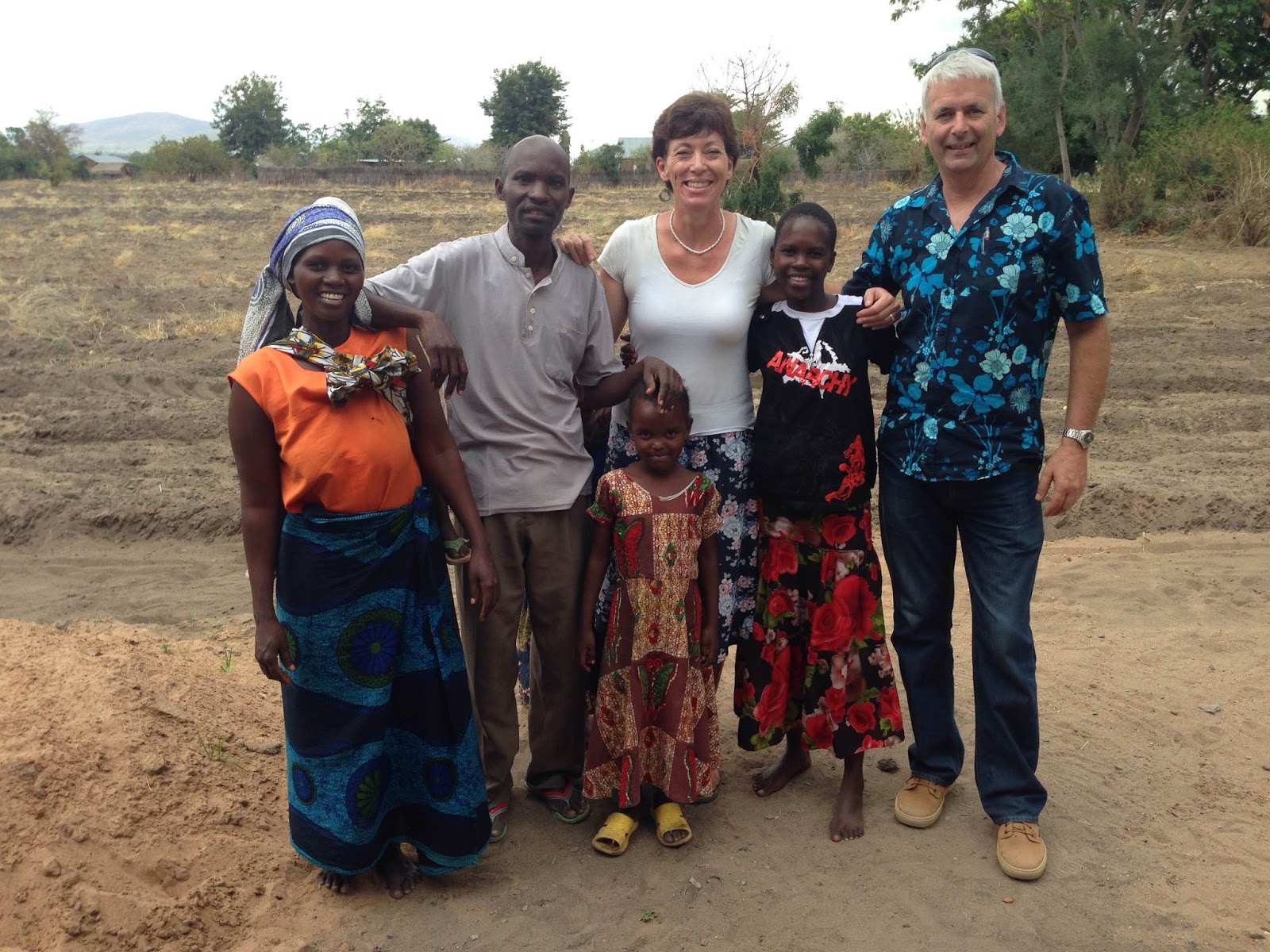
Pastor Francis and his family with Jan and Rod

We went and visited a local Magugu pastor (Pastor Francis) and his family that Rod, Jan and the prayer team know. Pastor Francis was taking a service at a neighbour’s house. When we arrived we were greeted so warmly and there was so much love and light in their eyes. I felt like I had known them forever even though I only just met them. As Pastor Francis preached he spoke about how several years ago he had a dream that three mazungu (white) missionaries came to visit him. He told his church at the time and the leaders laughed at him. He later had another dream that 7 missionaries came to visit him, again when he shared this dream he was laughed at. On one of Jan and Rods visits to the village they came across pastor Francis daughter Rachel (such a great name!) and ended up going to their house this is when they first met Pastor Francis and his family. Then on their next trip to Magugu they were with Becky and Adam (Emmas friends) and Mel and Dave (7 in total). Both his dreams were fulfilled which again shows how God works things out and brings people together to fulfil his purpose. Now Jan and Rod and the team can connect the people they pray for up with Pastor Francis to be taught and cared for. They were such a beautiful family that I wanted to bless them with some money. At this point they expressed their fears of having us visit. While they were extremely happy to see us they also worried because people in the village assume we will bring them money or gifts and then they try to get them to give them money or worse try to steal from them. I don’t think their house had a door so it wouldn’t be difficult for people to rob them. It shows how poor this village is and how desperate they get. We prayed for Gods protection over them.

The children who followed us in the village


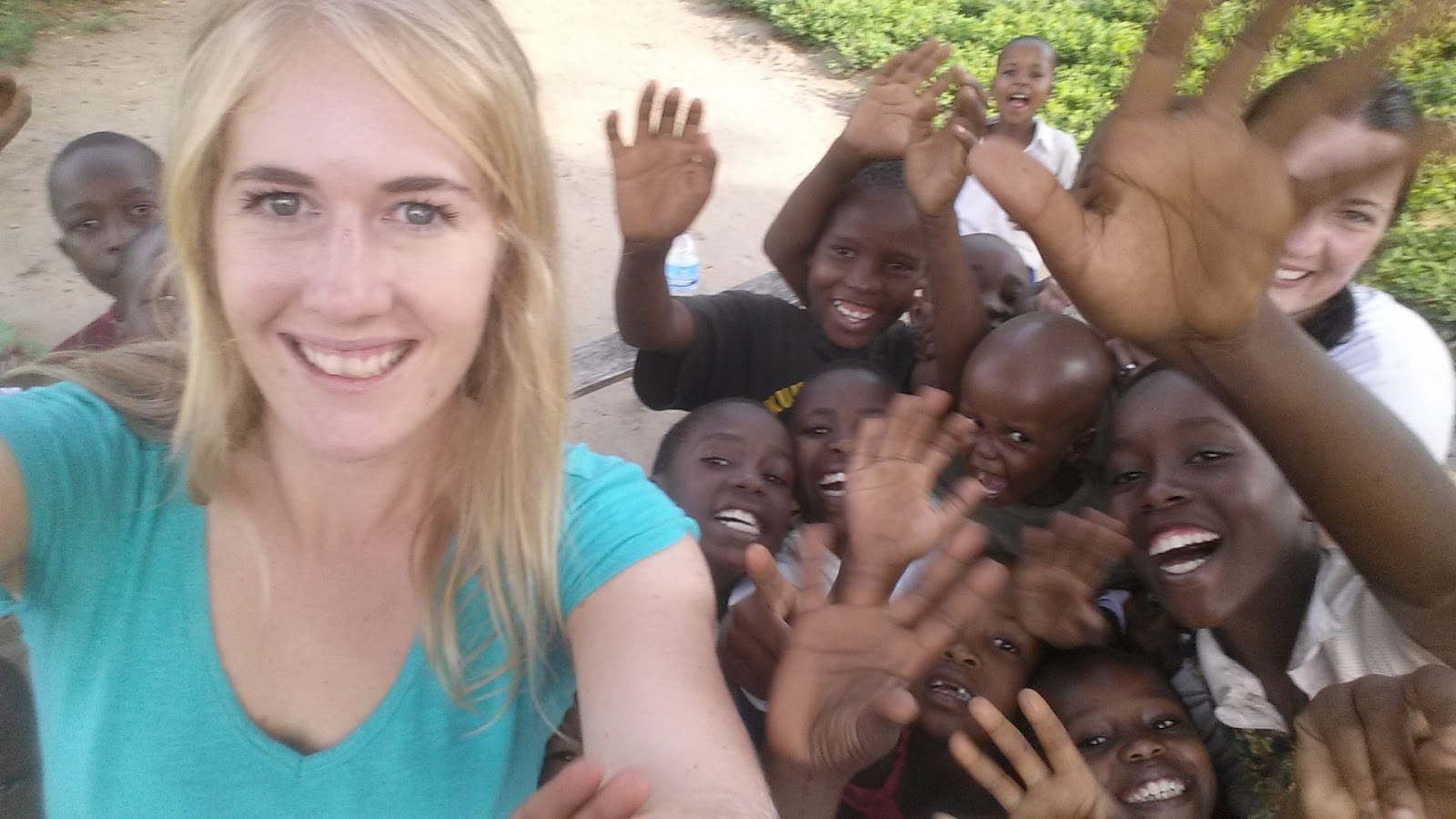
On our way to pastor Francis we collected a lot of children who walked with us the whole way. Every two seconds I would feel a child jump up and touch my hair, as they got braver they then held my hand they followed us all the way to the church service. I feel most content surrounded by children and I loved that all the village children were filling Pastor Francis neighbour living room and hearing teaching about Jesus. The people who owned the house were not quite as thrilled to have them there and told the children to leave a few times. It really bothered me because I didn’t understand why they wouldn’t want to invite children in especially to a church service.  Respect is a big thing in this culture and Rod pointed out to me that the father of the house didn’t want the children there so maybe he was feeling disrespected or felt that they were disrupting. The children were not put off by being sent away they just waited outside for us to come out and again bid for our attention. They continued to follow us almost all the way out of their village. As we walked along more and more children seemed to come out of houses until there was a flash mob of children around me all trying to stroke my hair, my arms, hold my hands one even licked my hand! It was pretty full on but very amusing.  I personally didn’t mind their attention. I figured if we were the first white people they met then I wanted them to feel loved, and special rather than to think we were scary, mean or standoffish.  If that meant getting covered in the dirt that they had all over their clothes and hands and having their not so clean hands through my clean hair so be it. After a while we had to ignore them so they would go back to their own homes and stop following us. By this stage they had learnt my name so as we walked off all I could hear was “Byeeee Rachel”


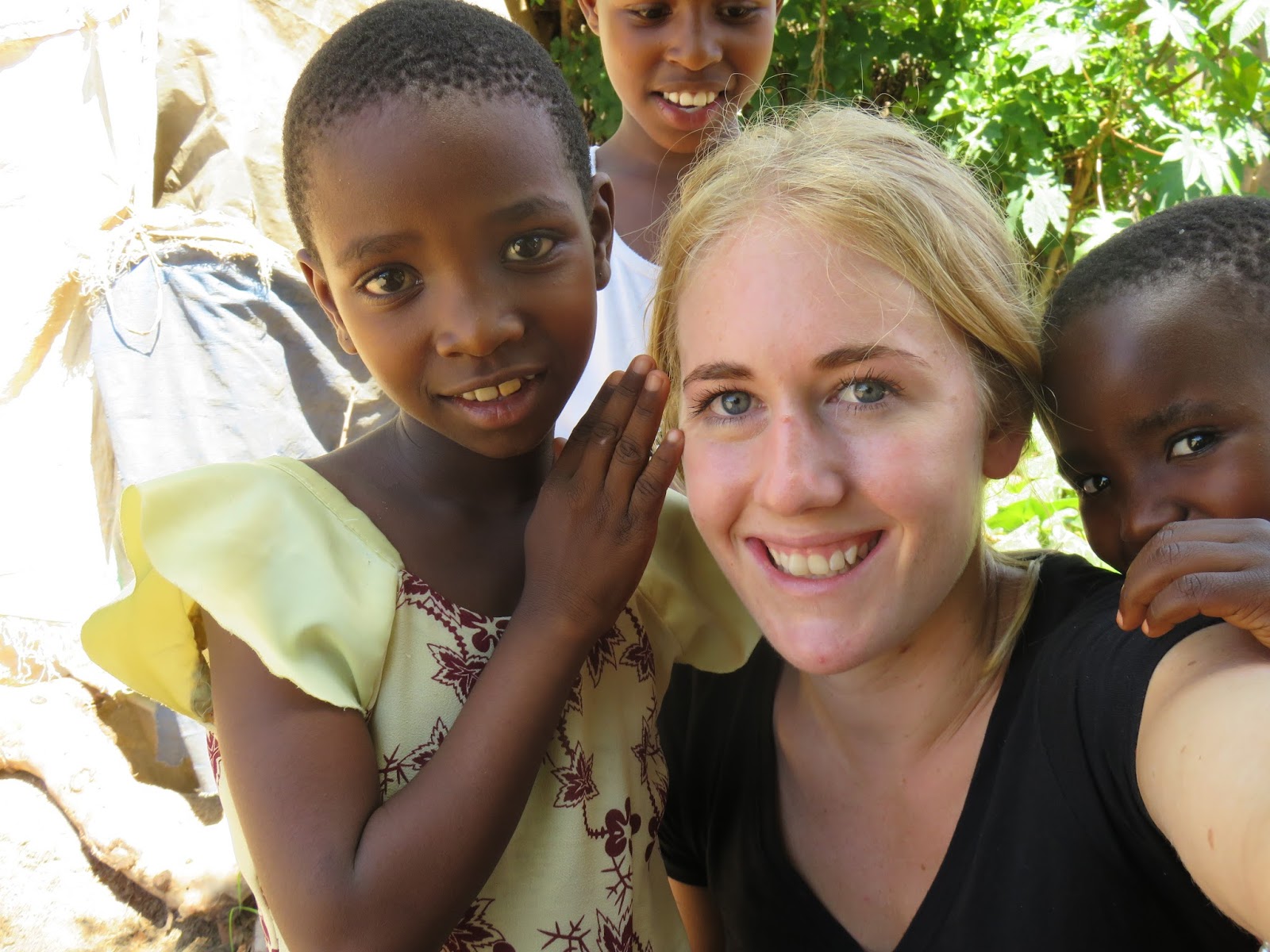
Earlier in the day we had visited a different part of the village where the team had already made some connections and lots of people came forward for prayer some gave their hearts to God, some were healed others were encouraged. It’s amazing how open people are. Once again we were also surrounded by children. This particular group of children were much calmer. They obviously had seen white people before. A young girl Rachel and I connected over the fact that we had the same name and she came and sat on my knee. She chatted to me in broken English and I chatted to her in broken Swahili. I took a photo of her and soon all the children there were crowding around wanting to have their photos taken.

I had gone to Magugu a day earlier than the prayer team with Wendy and Lynda. They had a different purpose for being there, they were there too mentor and prepare the teachers in the school in Magugu for the coming school year. On Monday they taught about the participatory method (involving students as opposed to just lecturing at them) As I listened to Lynda teach, I soon realised that although this approach is something I was taught and experienced through my own schooling and teacher training, for the teachers in Magugu it was a foreign concept. They had not been taught to question or to think outside the box. Lynda’s questions that seemed so obvious to me challenged the teachers a lot. It made me realise how much I have taken for granted the quality education I have received and I feel inspired to teach and to use what I have been taught, because if I don’t use what I have then it loses its value. I want to use my training to empower people. Lynda talked about how research shows if we are lectured to we only remember about 5% of what we are taught but if we have opportunities to teach others we remember 90%. I found this really fascinating. Sometimes it takes seeing the opposite of your own experience to really appreciate what you have. A week of eating Rice, beans, and soggy chips, and egg omelette makes you appreciate fresh fruit and veges. I had a chicken wrap last night and I swear a chicken wraps never tasted so good! And Squat toilets make you appreciate normal toilets!

Joshua school here in Arusha, starts back  Monday. That is where I will be spending the majority of my days, with some visits to other schools and to Magugu again as well… I am looking forward to it.


My schedule is going to be a lot busier now so these blog post will probably slow down a bit too.